
Alright, close your books for a minute.
I know you’ve just started MBBS —
new hostel rooms, anatomy labs, white coats,
and a thousand WhatsApp groups trying to tell you
how to “survive first year.”
But today, I want to talk about something that has nothing to do with marks or exams —
and everything to do with what kind of doctor you’ll become.
Let Me Tell You a Small Story
In last batch of MBBS, one of our students visited a village for the first time under this FAMILY ADOPTION PROGRAMME aka FAP.
She was nervous — city girl, new place, didn’t even know what to ask.
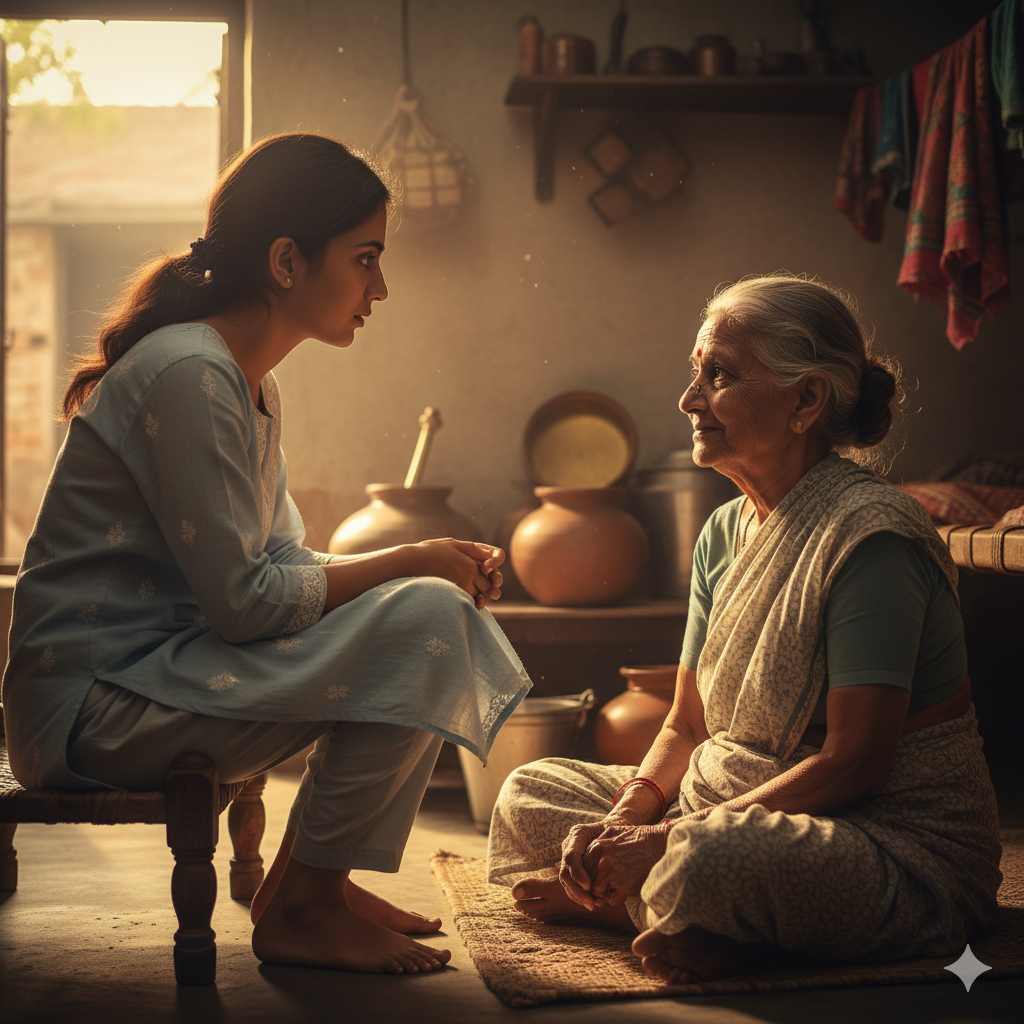
She sat with the family — an old grandmother, her son, his wife, and two little kids.
They offered her tea. The kids giggled because they’d never seen someone come from a “medical college” before.
While talking, she noticed the family stored their water in open buckets.
She asked softly, “Do you boil your water?”
The grandmother smiled and said, “No, beta, we’ve been drinking it this way for years.”
She didn’t scold them or give a lecture.
She just explained what clean water can do for children’s health.
Three weeks later, when she went again —
there was a lid on that bucket.
No big words. No prescription pad. Just one honest conversation.
That’s when she said,
“I think this was the first time I actually felt like a doctor.”
That’s what this programme is really about.
So What Exactly Is the Family Adoption Programme?
It’s simple — each of you will “adopt” one or two families in a nearby community.
You’ll visit them, talk to them, get to know their lives —
their food, their home, their children, their problems, their happiness.
You’ll listen, observe, and slowly, you’ll start to see medicine differently.
It’s not about diagnosis or treatment yet.
It’s about understanding health where it really lives — inside people’s homes.
Why This Matters So Much
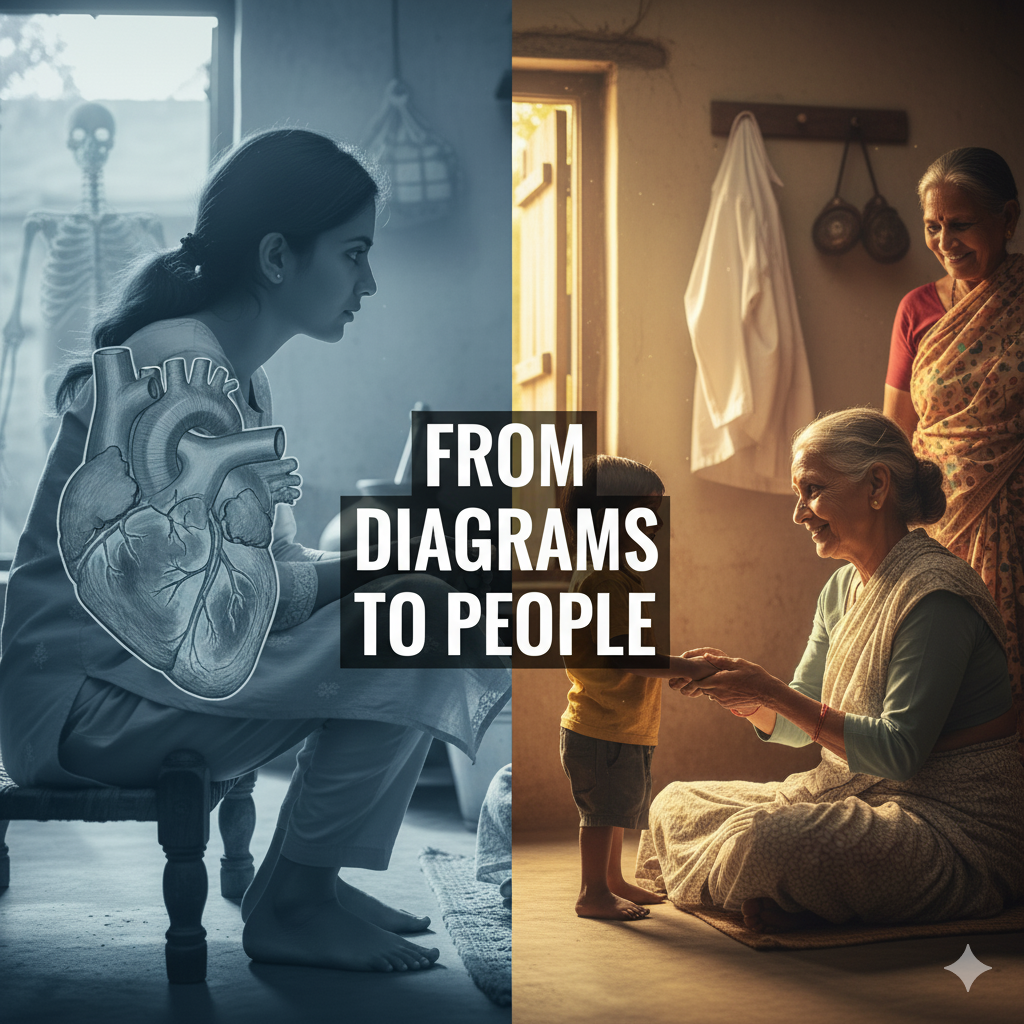
See, until now you’ve studied humans as diagrams and specimens.
This is your first chance to meet humans as people.
You’ll see that:
A mother doesn’t skip a vaccine because she doesn’t care — she might not have transport.
A man doesn’t delay treatment because he’s ignorant — he might be worried about the hospital cost.
A child isn’t underweight because of “malnutrition” in your record — it’s because there’s only one earning member and five mouths to feed.
When you see that, you begin to understand health not as a subject, but as a story.
Your Real Role
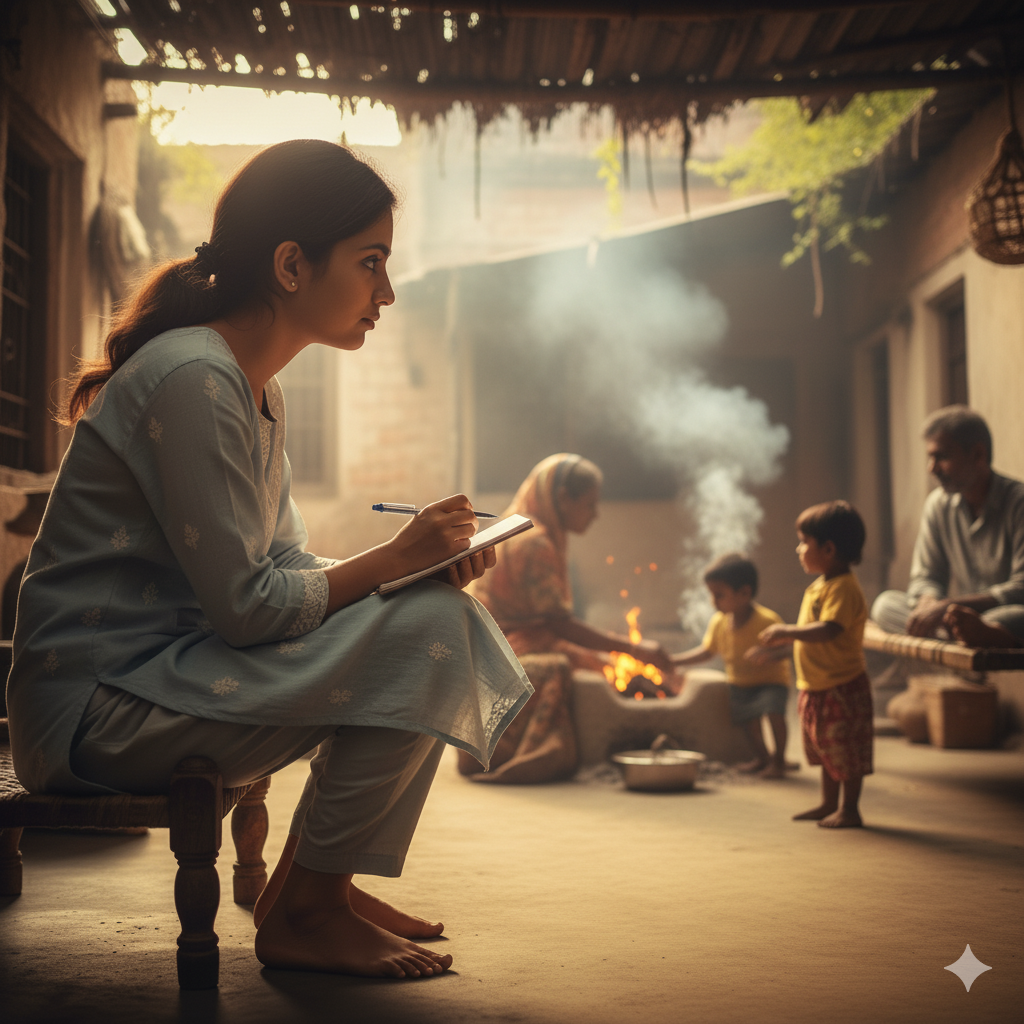
You’re not going there just to check BP and fill forms.
You’re going to build trust.
You’re going to listen.
You’re going to learn how to talk to someone who doesn’t understand your language of medicine.
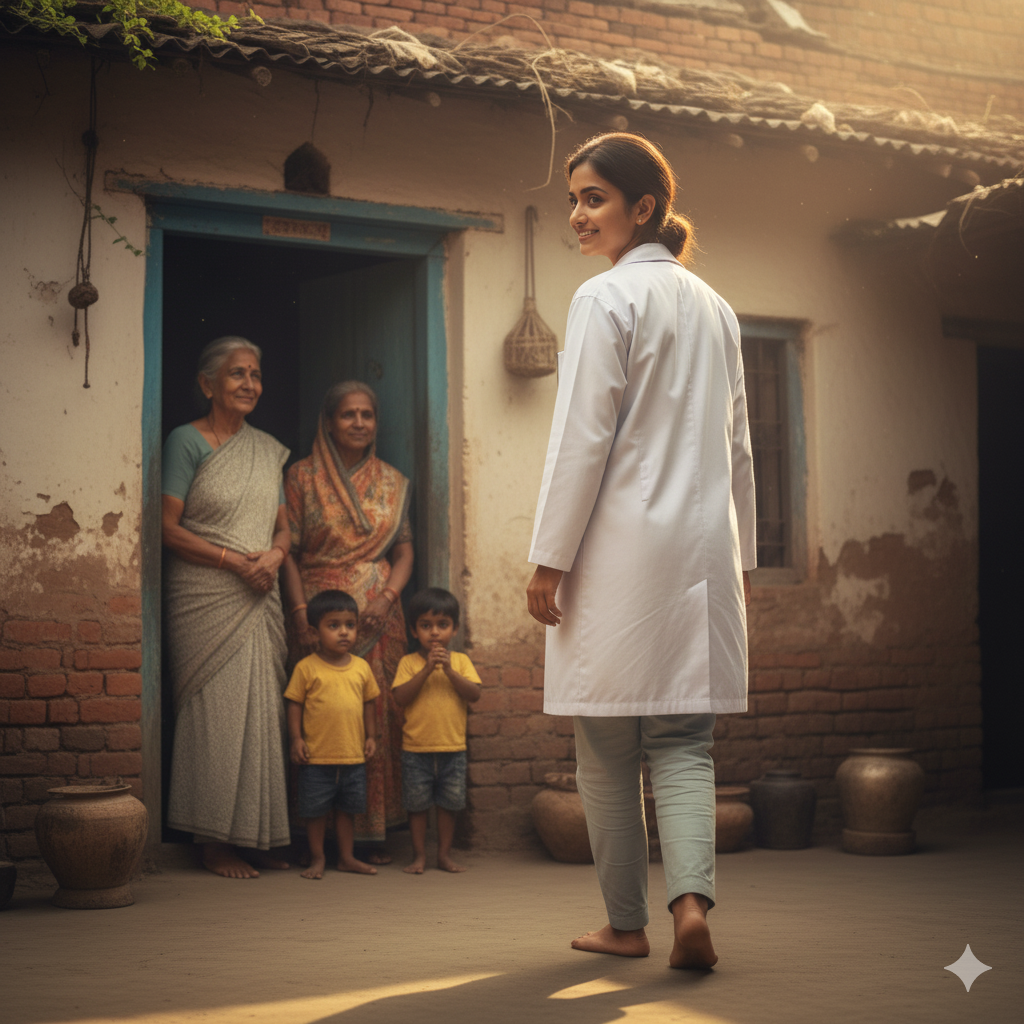
One day, when that family sees you coming, they’ll say,
“Doctor sahab aa gaye!”
even though you haven’t finished first year yet.
That respect, that connection — is the biggest classroom you’ll ever enter.
What You’ll Learn Without Even Realizing
How to make someone feel heard.
How to teach without sounding like a textbook.
How small habits make big differences.
How community shapes disease and health.
How it feels to make a difference, quietly.
The Secret Gift
This programme doesn’t just help the family.
It helps you.
It grounds you.
It keeps you from turning into the kind of doctor who knows diseases but not people.
It teaches you that medicine isn’t only about stethoscopes — it’s about stories, smiles, and small changes.
When You Visit Your Family…
Don’t go with a checklist.
Go with curiosity.
Ask them about their day.
Play with the kids.
Sit on the floor if they offer you a seat.
Look around quietly — you’ll start noticing things:
the water pot, the kitchen smoke, the schoolbooks, the mother’s tired eyes.
That’s your real classroom.
You’ll come back and realize:
Anatomy teaches you what a heart looks like.
But this — this teaches you what a heart feels like.
And One Day…
Years later, when you’re a busy doctor, rushing through OPD rounds,
you’ll remember that first family — their tea, their smiles, their trust.
And it’ll remind you why you chose this profession in the first place.
In the end, remember this:
You may not remember every nerve or enzyme.
But you’ll always remember the family that first taught you what it means to care.
That’s the Family Adoption Programme.
It’s not an activity. It’s your first step towards becoming a healer.
Now That You’ve Felt the Heart of It…
If you’ve read this far, pause for a moment.
Take a deep breath.
Because you’ve just understood something most people take years to realize —
that medicine begins long before the hospital.
You now know what the Family Adoption Programme means.
But to make it truly yours, you need to understand how it works.
How to choose the family.
How to talk, listen, observe, record, and report.
How your small visits build a bigger picture of community health.
And don’t worry — it’s not complicated.
It’s just structured compassion. 💖
So before your excitement fades, go read the next blog:
“Family Adoption Programme — How It Works and How You’ll Be Part of It.”
It will show you, step by step, how to turn that feeling you just got — that spark of purpose — into real action.
Finish it soon, and you’ll not just complete your assignment…
you’ll start your journey — as the kind of doctor India truly needs.