
🧠 After reading this, you will understand:
- How does filtration clean water?
- Why is silver used in some filters?
- Why do filters need regular cleaning?
- Why are ceramic filters not suitable for all places in India?
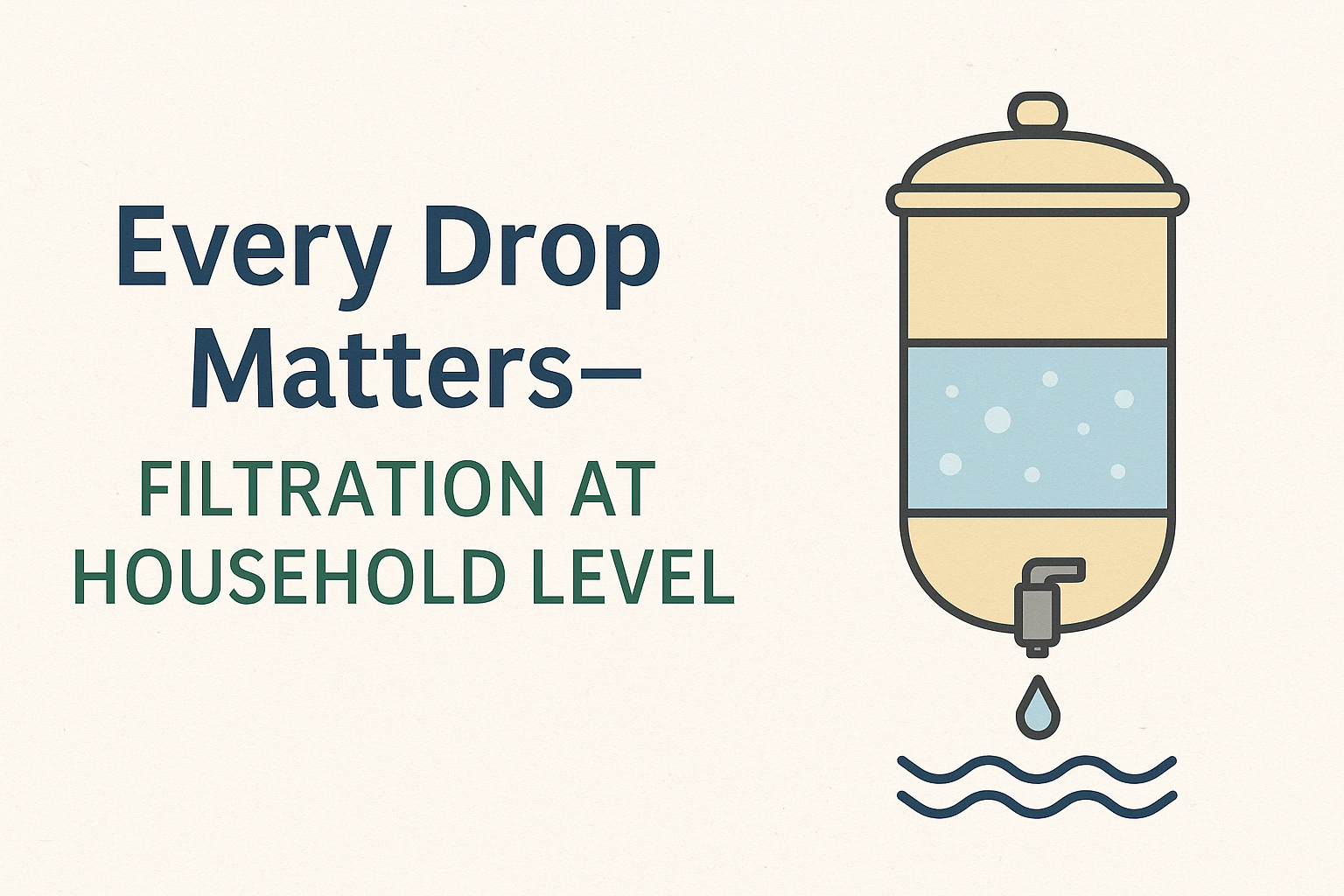
What is Filtration?
Filtration means cleaning dirty water by passing it through a filter that traps dust, germs, and other particles.
Types of Ceramic Filters
There are some common ceramic filters used for water purification:
- Pasteur-Chamberland filter
- Berkefeld filter
- Katadyn filter
The main part of every filter is called the candle, which actually purifies the water.
This candle is made of:
- Porcelain (in Chamberland filter)
- Kieselguhr or infusorial earth (in Berkefeld filter)
Read More: Why Ceramic is Chosen for Filter Candles
The Katadyn Filter and Silver Coating
The Katadyn filter has a silver coating on its surface.
This silver helps kill bacteria that come in contact with it.
👉 This killing power of silver is called Oligodynamic Action.
💡 What is Oligodynamic Action?
“Oligodynamic action” means that even a very small amount of metal (like silver) can kill bacteria and other germs.
So, when bacteria touch the silver surface, silver ions are released and destroy the bacteria.
But remember — this action kills bacteria, not viruses (because viruses are much smaller and can pass through the filter).
Maintenance and Cleaning
- The filter candle can get blocked (clogged) with dirt and bacteria.
- It should be cleaned with a hard brush and boiled once a week.
- Always use clean water in the filter, otherwise it can get spoiled.
Limitations
Even though ceramic filters work well to clean water:
- They don’t remove viruses.
- They are hard to maintain in dusty or muddy areas.
- That’s why they are not suitable for widespread use under Indian conditions.
Real-life Application
- Ceramic filters are useful for small-scale use (homes, clinics, small communities).
- They are helpful in emergency situations where clean water is needed.
- Silver-coated filters are also used in modern water purifiers because of their antibacterial effect.
Quick Recap
| Concept | Simple Meaning |
|---|---|
| Filtration | Cleaning water by passing through a filter |
| Candle | The main purifying part of the filter |
| Oligodynamic action | Silver kills bacteria in small quantities |
| Katadyn filter | Has silver coating; kills bacteria but not viruses |
| Cleaning | Must scrub weekly and boil |
| Limitation | Not effective for viruses; hard to use everywhere in India |
Household filtration plays a vital role in reducing waterborne diseases. Applying the principles of filtration and community hygiene, analyze the situation below and suggest practical solutions.
In a rural community where access to electricity and advanced water purifiers is limited, cases of diarrheal diseases are increasing.
As a public health officer, how would you educate households to use and maintain ceramic or silver-coated filters effectively to ensure safe drinking water?
Hints for students to think about:
- What are the basic principles of filtration you would explain?
- How would you demonstrate cleaning and maintenance of the filter?
- What community-level strategies could help improve adoption?
- How does this simple technology help prevent waterborne diseases?