
The First Step: Preparation Before the Visit
Before you step into the community, you prepare just like you would before a journey.
No stethoscope needed (yet). Just curiosity, respect, and a pen that writes with purpose.
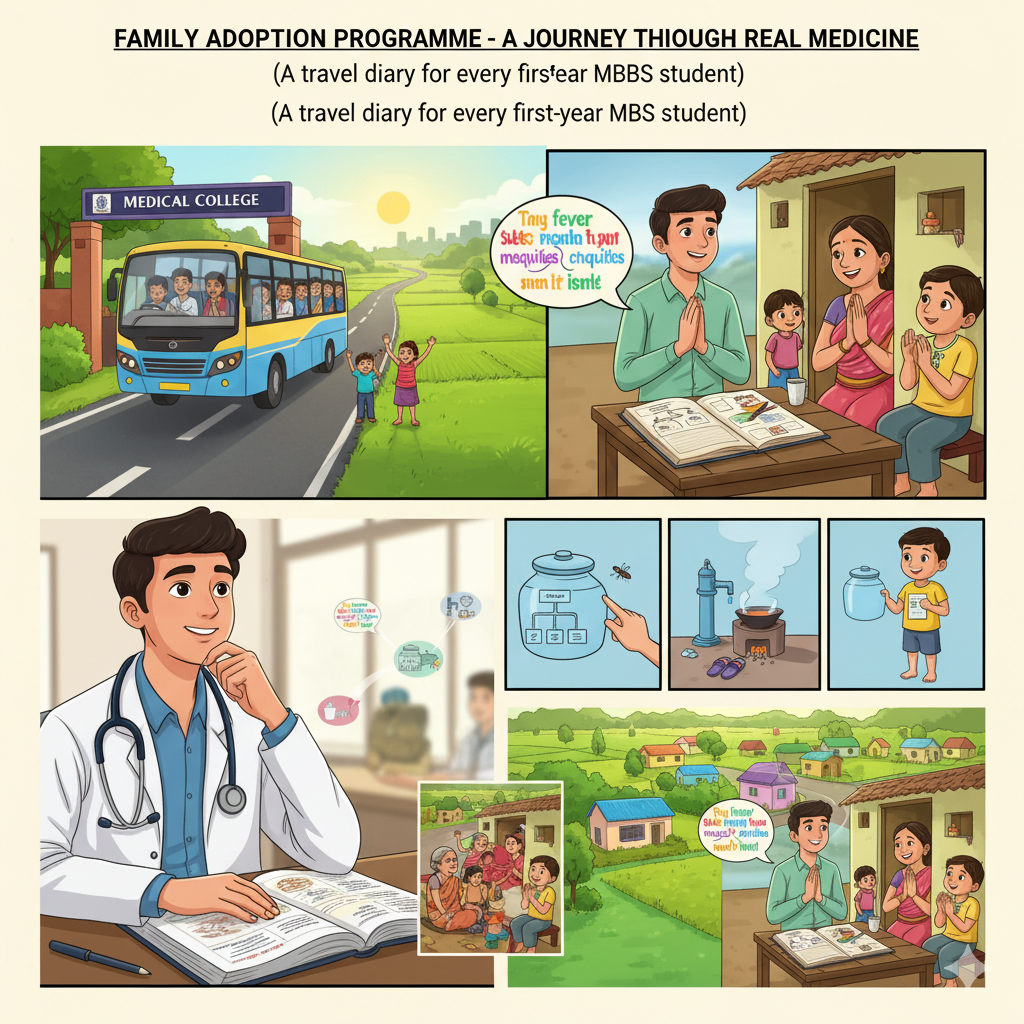
What You Carry:
Your Family Folder (given by your department)
A notebook and ID card
A smile (your most powerful diagnostic tool 😄)
Curiosity — not about diseases, but about people.
Rationale:
Before a doctor learns how to cure, they must learn how to approach.
This step trains you to observe, respect privacy, and communicate — the human side of medicine.
Reaching the Community
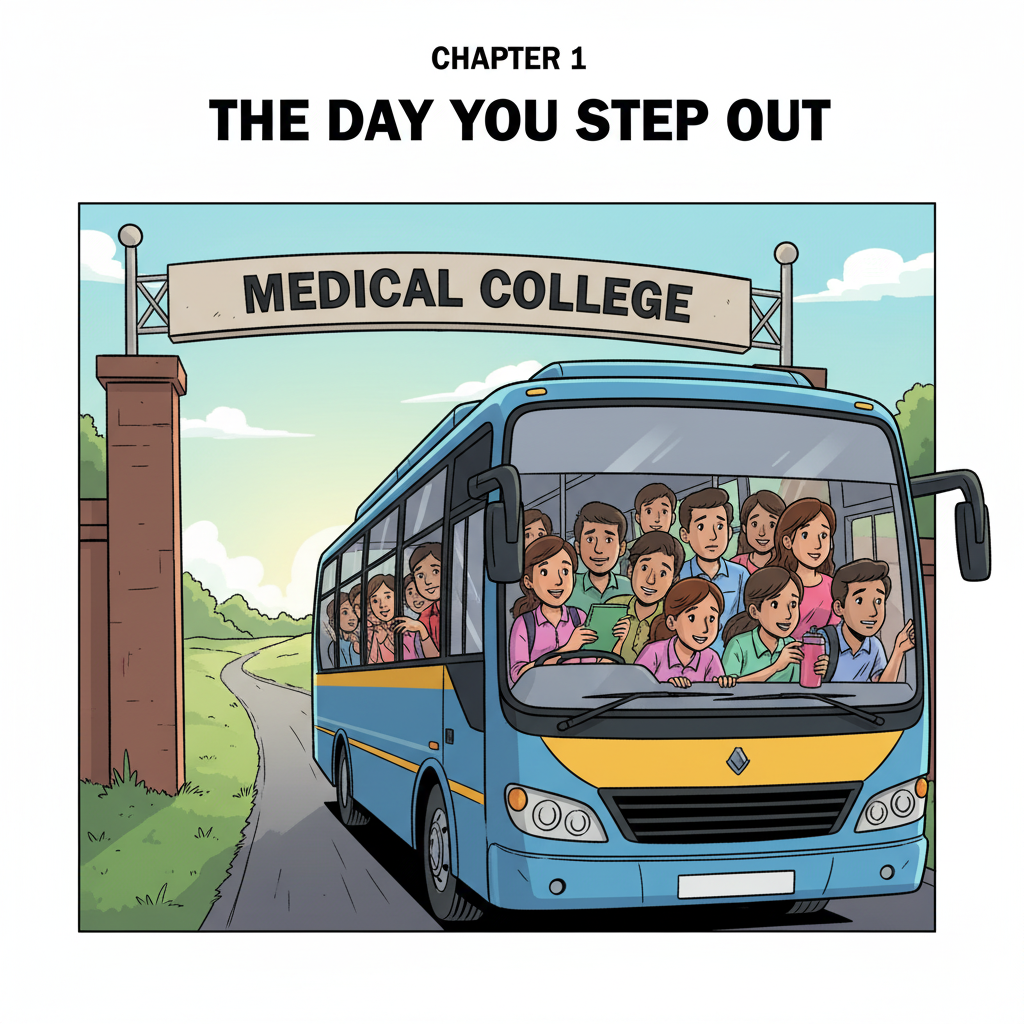
The journey is half the lesson.
You’ll see how far the health centre is, how transport works, what the roads are like — and soon realize these aren’t just sights; they are determinants of health.
A bumpy, long road = delayed treatment.
No public transport = missed antenatal visits.
💬 Lesson: Health is not just biology. It’s geography, economy, and empathy.
🏡 First Impressions at the Family’s Home
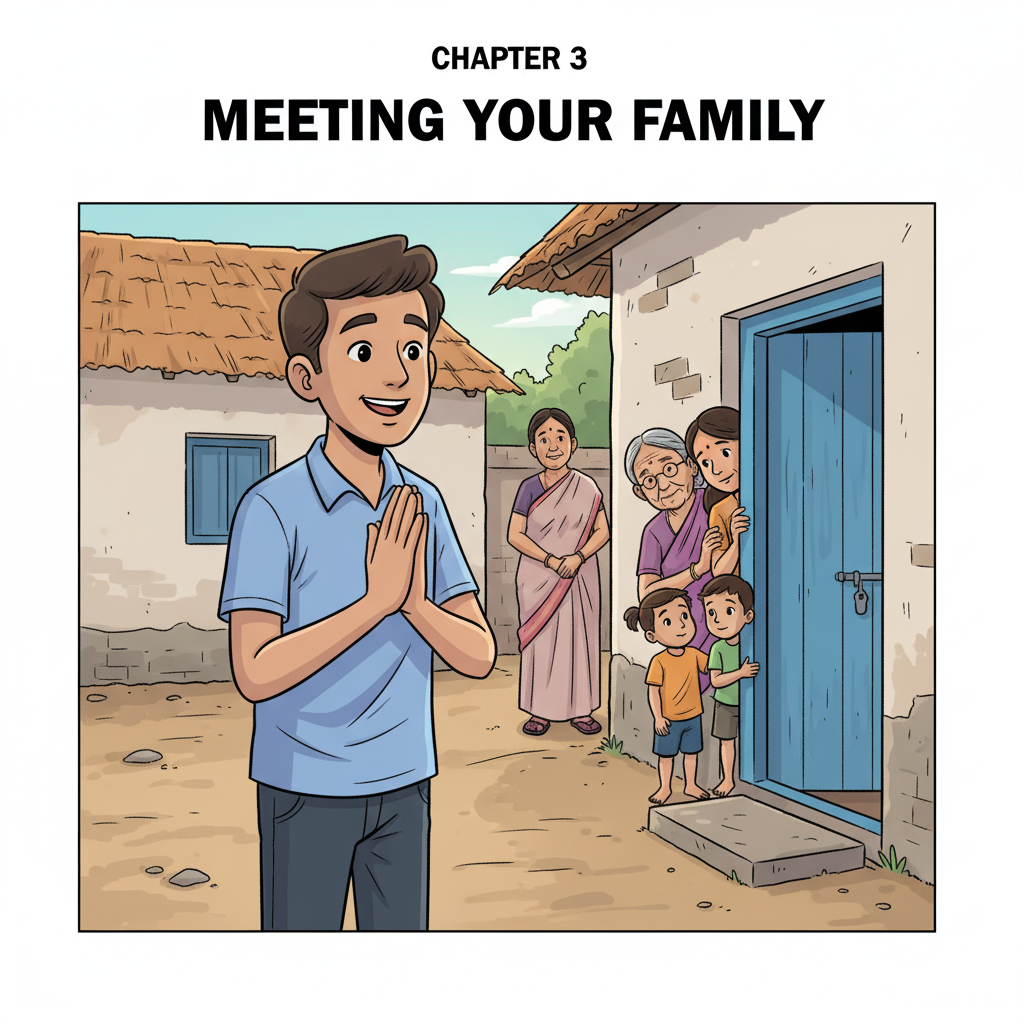
You arrive at your adopted family’s home.
Take a moment to look around — how is the house built? What’s the water source? Where is waste disposed of?
But before your eyes take notes, let your heart connect.
Say hello. Sit if they offer.
Start with small talk: “How’s everyone doing today?” “How’s the weather been?”
Then slowly, like a storyteller, let the conversation flow toward health.
💡 Rationale:
Trust is the bridge between knowledge and action.
If they trust you, they’ll open up.
If they open up, you’ll learn the real story — not what’s written in a report, but what happens behind closed doors.
🧾 The Family Folder: Your Story Map
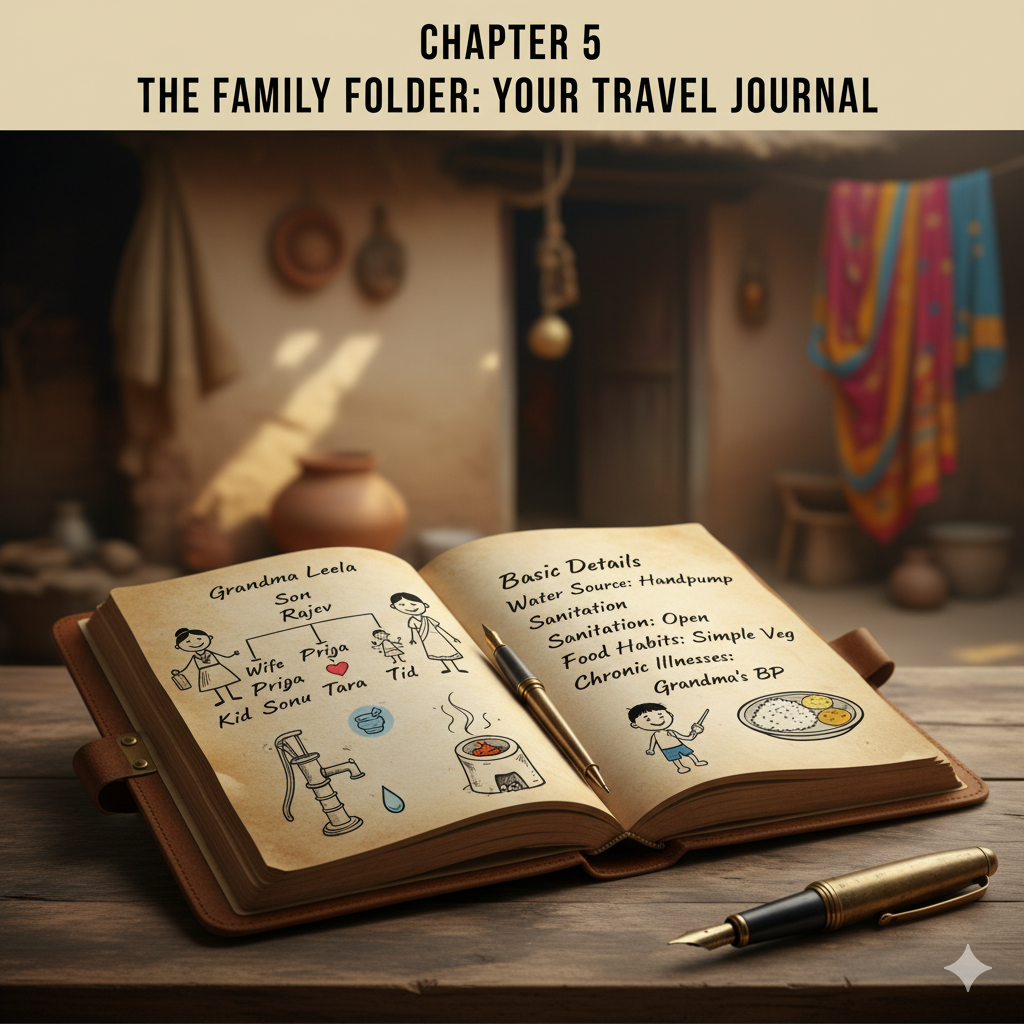
This is your most important travel document.
Think of it as your “medical passport” for that household.
Inside, you’ll record:
- Family composition (names, age, education, occupation)
- Housing type and sanitation
- Source of water and waste disposal
- Nutrition patterns
- Immunization status of children
- Common illnesses and risk factors
You’ll fill it gently, one observation at a time, over multiple visits.
Remember — this isn’t paperwork. It’s a portrait of health.
💡 Rationale:
Data is what transforms observation into science.
You can’t improve what you don’t record.
Each column you fill becomes a pixel in India’s public health picture.
🍲 The Observation Walk
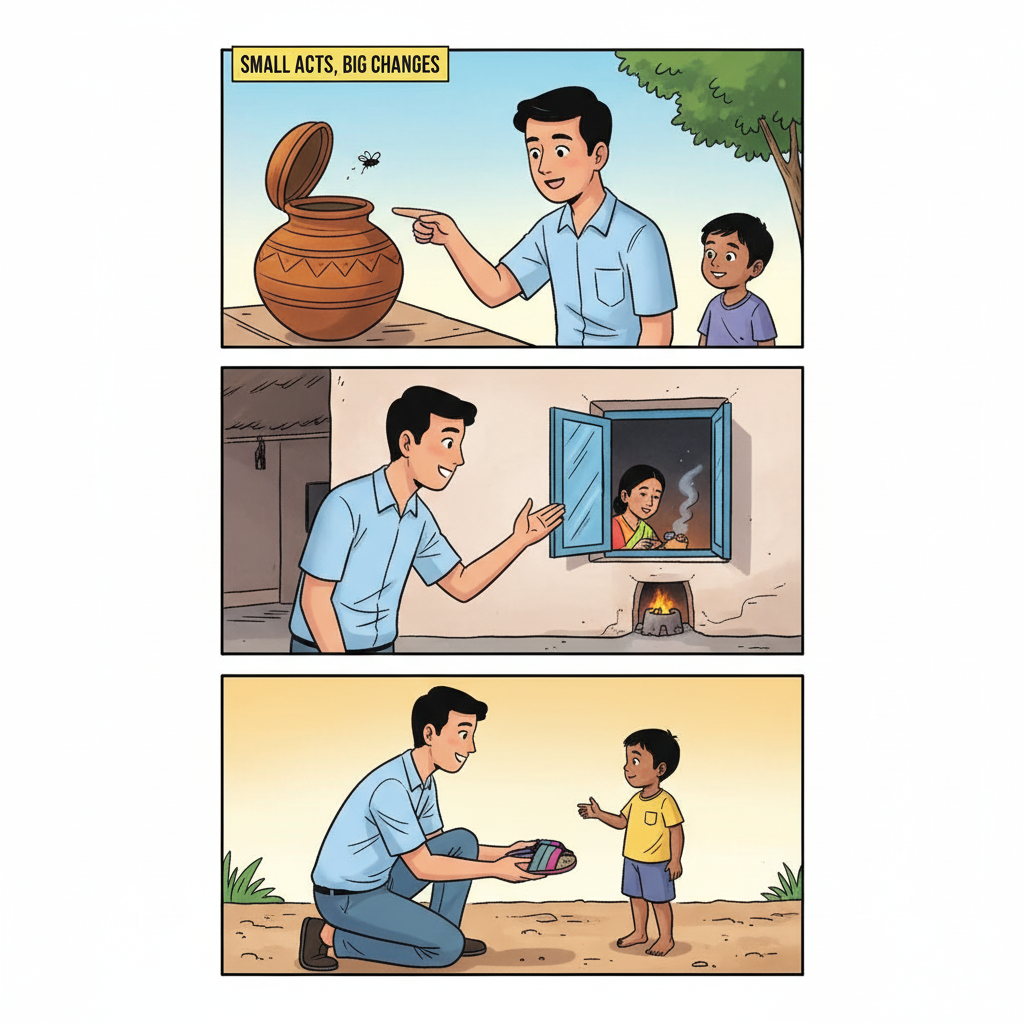
After the chat, take a slow “health walk” around the house — respectfully.
Check:
- Is water stored safely?
- Is there a bathroom?
- Any stagnant water nearby (mosquitoes)?
- How is food cooked — smoke-filled room or ventilated kitchen?
These small details whisper the truth about health.
You’ll start connecting dots — the way a detective does, but with kindness.
💡 Rationale:
You’re learning what textbooks call “environmental sanitation,” but here, it has faces, smells, and stories.
This is real field epidemiology.
💬 Conversations That Heal
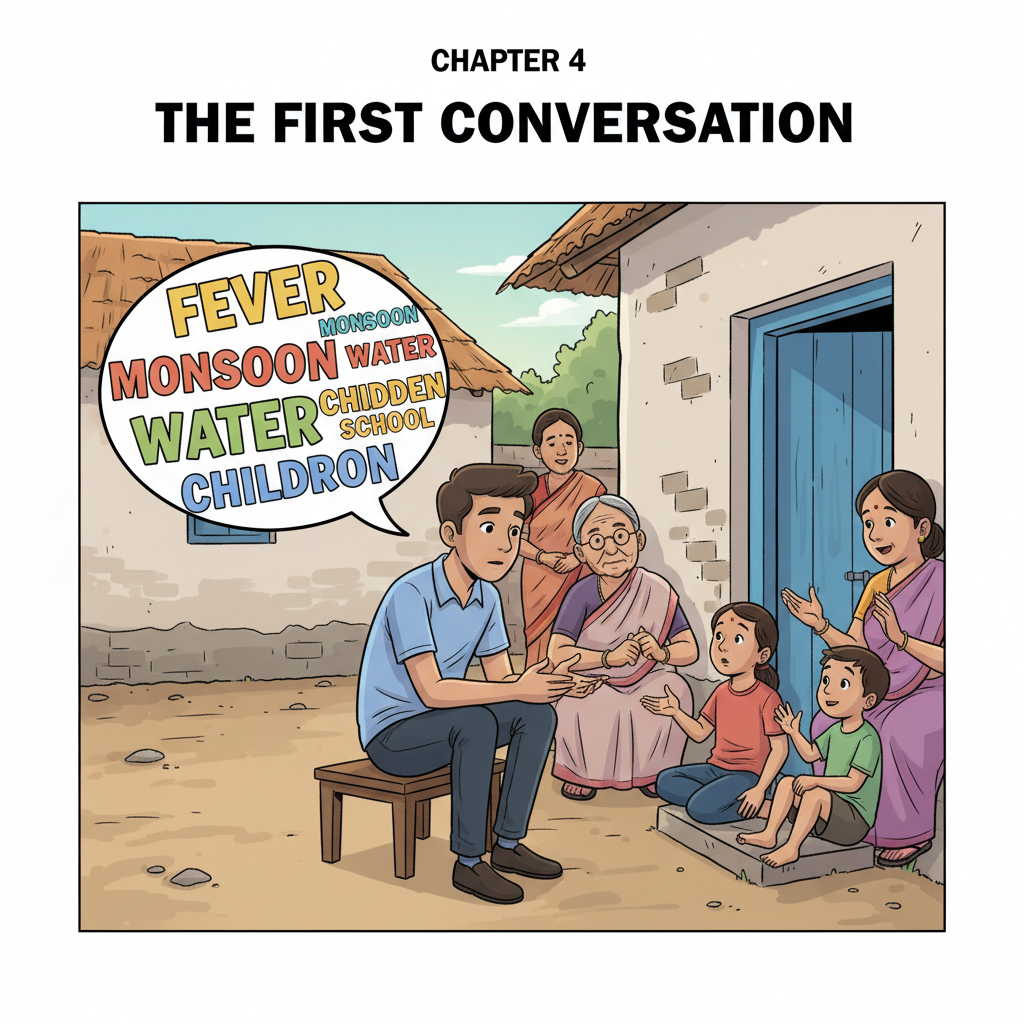
Now you start the soft skill — communication.
Ask questions, not like an investigator, but like a friend:
“Do you wash your hands before cooking?”
“Where do you keep drinking water?”
“Have you been feeling tired lately?”
Listen more than you speak.
When you explain something — like washing hands or boiling water — use examples they relate to.
💬 Example:
“Just like you clean the vessel before cooking, clean your hands before eating.”
💡 Rationale:
This is how health education works — by translating science into everyday life.
You’re learning how to talk medicine in the language of humanity.
🔄 The Second Visit (Follow-Up)
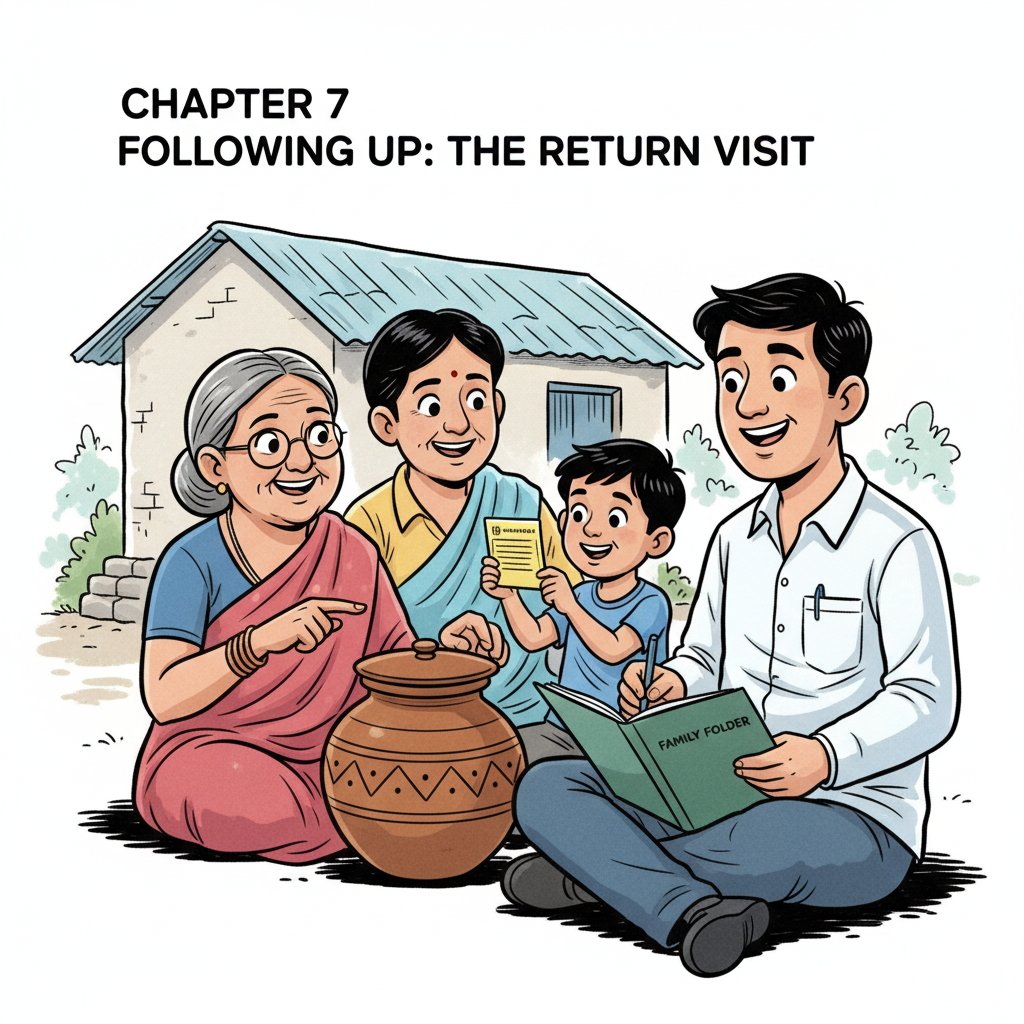
The second visit is when the magic begins.
You’re no longer a stranger — you’re “doctor sahib” or “beti from the medical college.”
Ask:
“How are things now?”
“Did you try what we discussed?”
You’ll find joy in small victories — a covered water pot, a new mosquito net, a clean handwashing area.
💡 Rationale:
Follow-up builds continuity — the foundation of preventive medicine.
One-time advice fades, but consistent guidance shapes behavior.
🧠 Reflection and Reporting
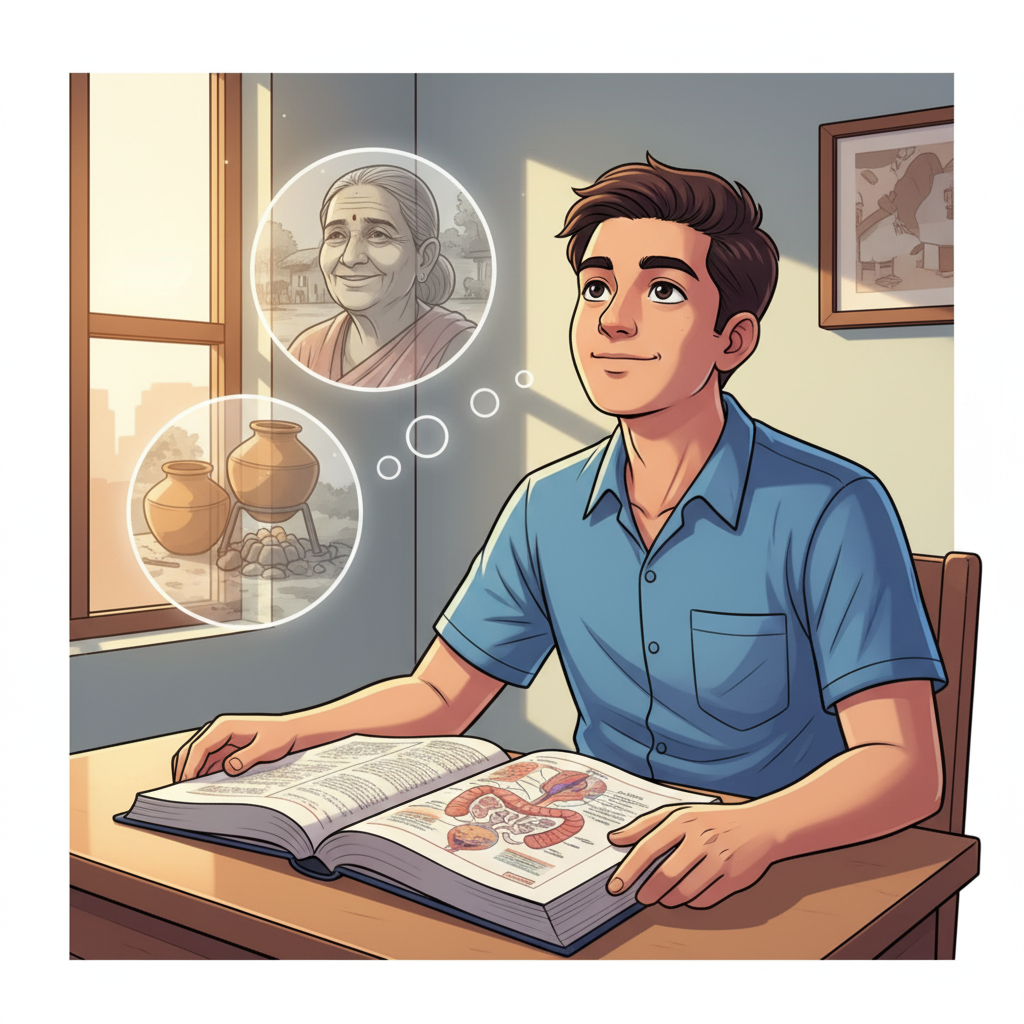
Back in college, you’ll sit with your team to discuss your findings.
Some students found cases of malnutrition; others saw maternal anemia or poor sanitation.
Together, you form the bigger community picture — the Community Diagnosis.
Then comes your reflection report.
Write not just what you saw, but what you felt.
That reflection transforms observation into understanding.
💡 Rationale:
Reflection = Experience × Insight.
It’s what separates memorization from learning.
Public health grows when doctors think, “Why?” not just “What?”
🩺 The Health Team Connection
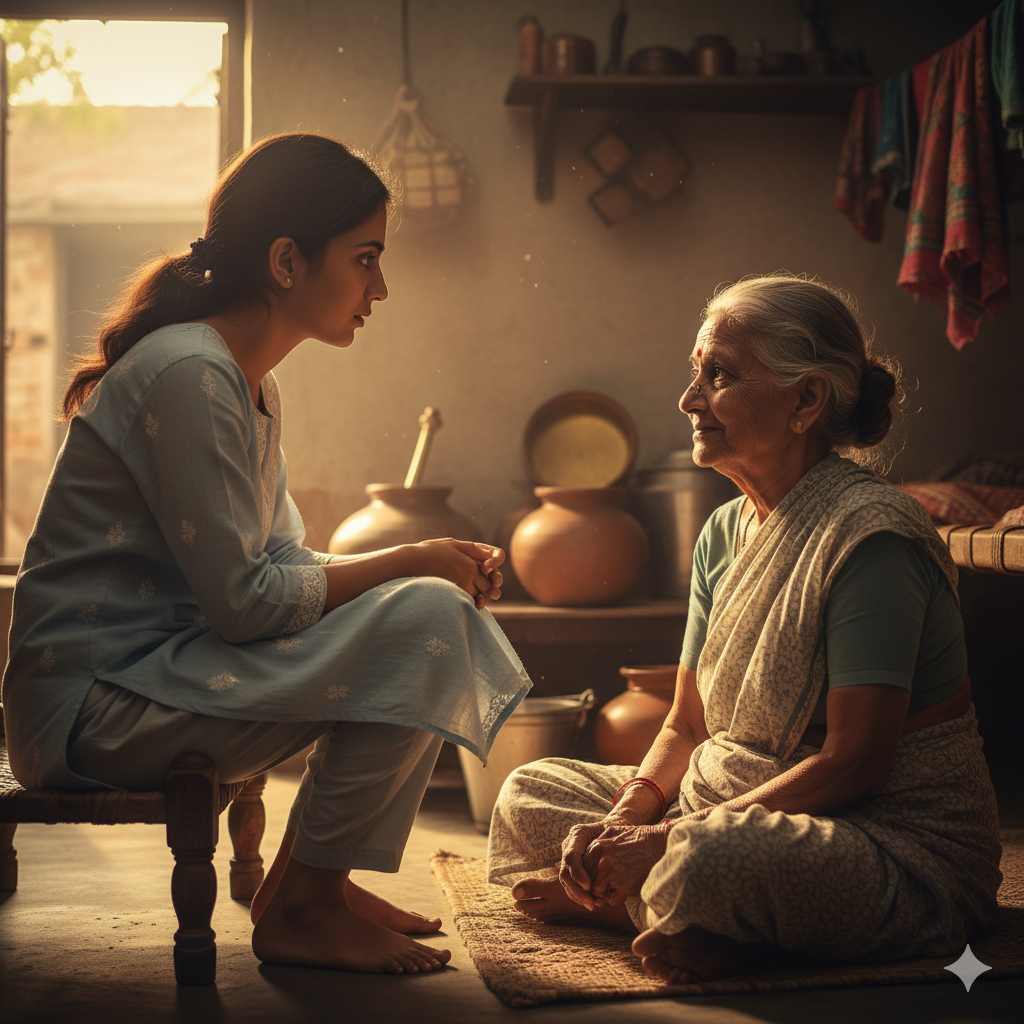
In some visits, you’ll meet:
- ANM (Auxiliary Nurse Midwife) — backbone of maternal & child health
- ASHA Worker — your bridge between family and system
- MPHW or Health Supervisor — the organizer behind every record
Ask them questions. Watch how they work.
You’ll learn how real healthcare functions beyond hospital walls.
💡 Rationale:
Medicine isn’t a solo performance.
It’s an orchestra — and you’re learning who plays which instrument.
🎓 The Bigger Outcome
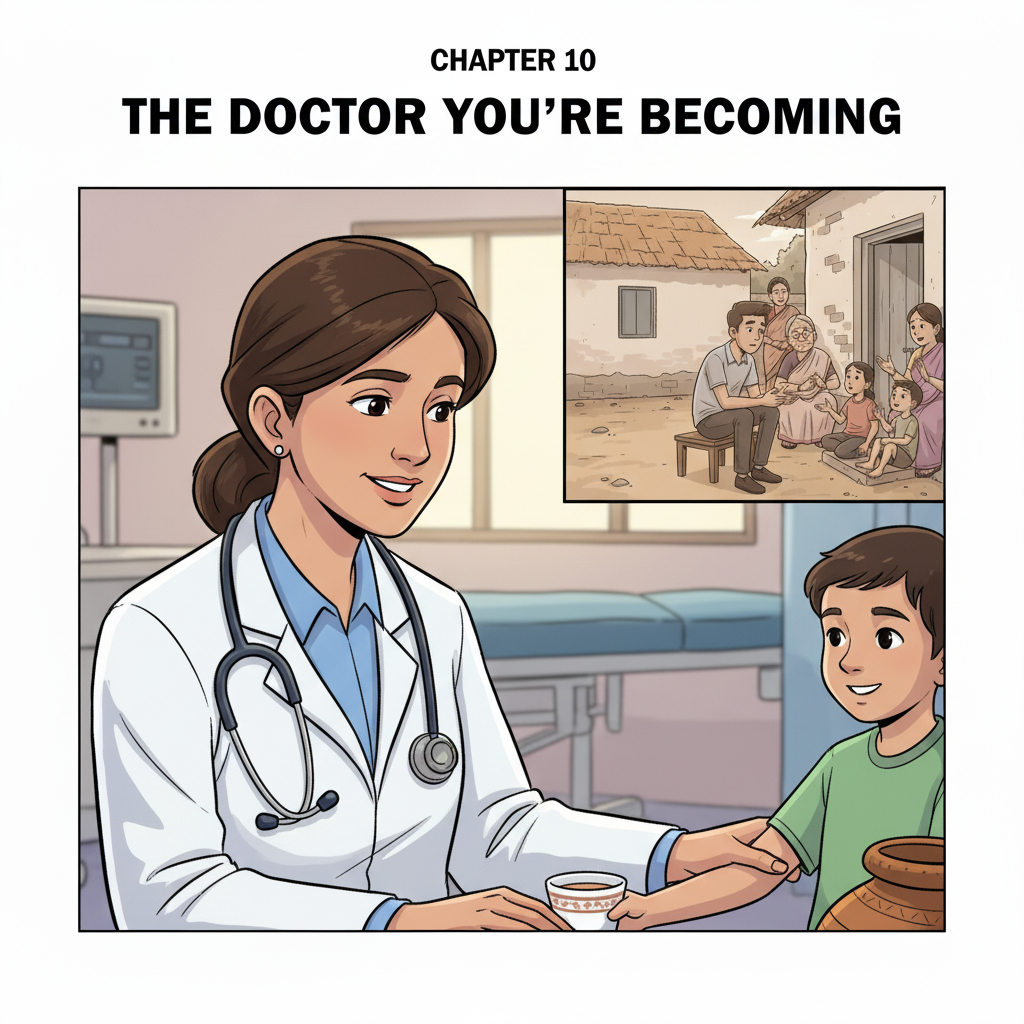
By the end of your first year, you’ll realize something beautiful —
that the Family Adoption Programme isn’t just teaching you about the community…
it’s teaching you about yourself.
You’ll see the faces of families that trusted you.
You’ll feel responsible, aware, and grounded.
You’ll know what it means to be a doctor in a country where health lives in homes, not hospitals.
🌻 What You Actually Gained
| You Did | You Learnt |
|---|---|
| Visited a family | Observation, empathy |
| Collected data | Scientific documentation |
| Counseled them | Health education & communication |
| Followed up | Continuity of care |
| Reflected & reported | Analytical and ethical thinking |
🕊️ Final Thought
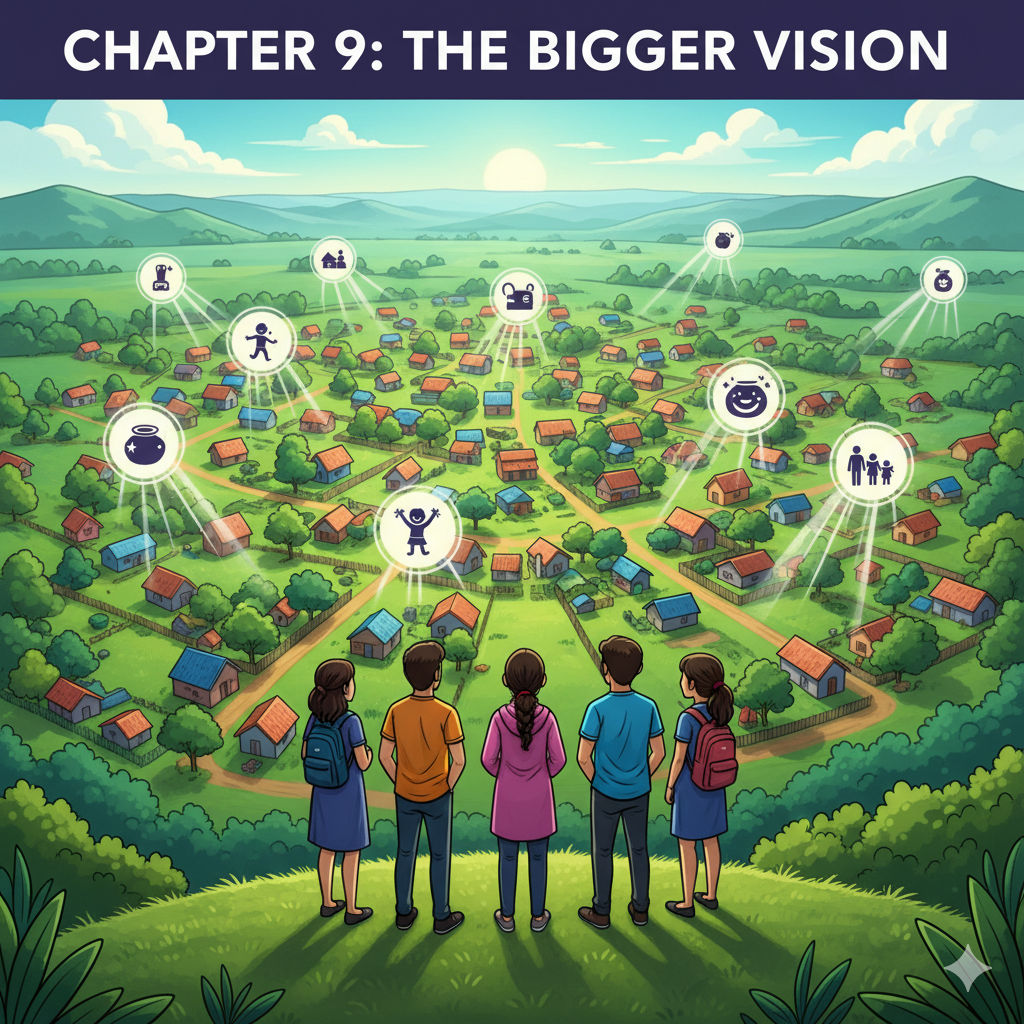
“You might forget the details you recorded in your family folder…
but the faces, the smiles, the trust — those stay with you forever.”
When you meet your first hospital patient, you’ll realize —
you already met your first human story months ago, under a tin roof, sitting on a woven cot, talking about clean water and dreams.
That’s when you’ll understand what this programme was truly about. ❤️
🪶 Ready for the Next Step?
If this travel story made you curious, your journey doesn’t end here.
Head to the next blog 👇
👉 “From Families to Communities — How Family Adoption Data Builds the Health Map of India.”
There you’ll learn how all your small family visits combine to form something powerful — a Community Diagnosis that guides policy, planning, and the future of healthcare.
Because what starts with one home… eventually changes a whole nation.