
(Because Ayurveda and Homeopathy are not the same!)
🧠 After reading this, you will understand:
- What AYUSH actually stands for.
- The basic principle and idea behind each system.
- How each system works in simple terms.
- Why AYUSH exists separately from modern (allopathic) medicine.
- How all systems can work together for better health.
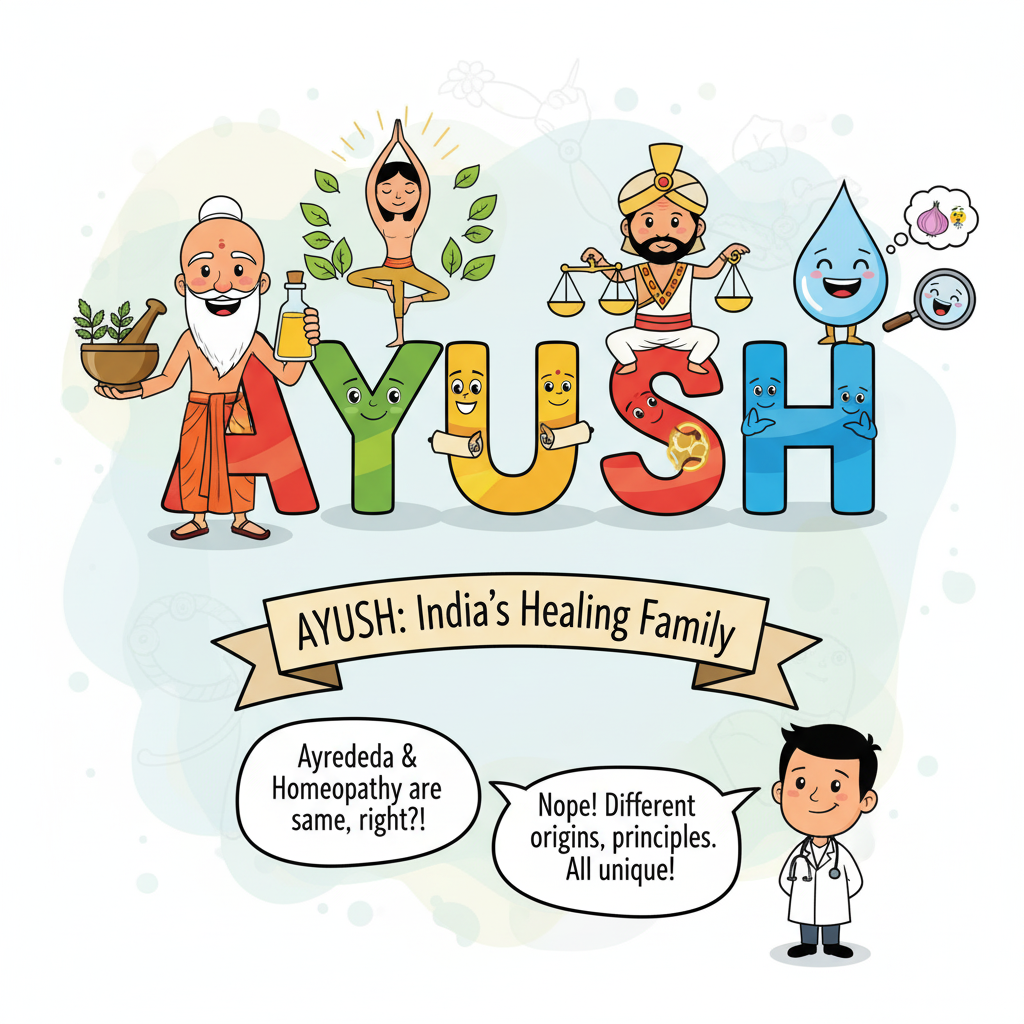
What is AYUSH?
AYUSH is an abbreviation that stands for:
| Letter | System | Origin |
|---|---|---|
| A | Ayurveda | India |
| Y | Yoga & Naturopathy | India |
| U | Unani | Greece → Arabia → India |
| S | Siddha | South India (Tamil Nadu) |
| H | Homeopathy | Germany |
So, AYUSH is not one system,
but a group of five different systems of medicine, each with its own philosophy and way of healing.
Why AYUSH Exists
India has a long history of traditional medicine.
Before modern (allopathic) medicine came, people relied on these systems for health care.
Even today, many still use them — especially for chronic illnesses, lifestyle diseases, and preventive health.
👉 That’s why the Ministry of AYUSH was created —
to promote, regulate, and research these traditional systems alongside modern medicine.
Let’s Understand Each System in Simple Words
🅰️ A – Ayurveda
Meaning: “Science of Life” (Ayur = Life, Veda = Knowledge)
Origin: Ancient India — developed more than 3,000 years ago.
Main idea:
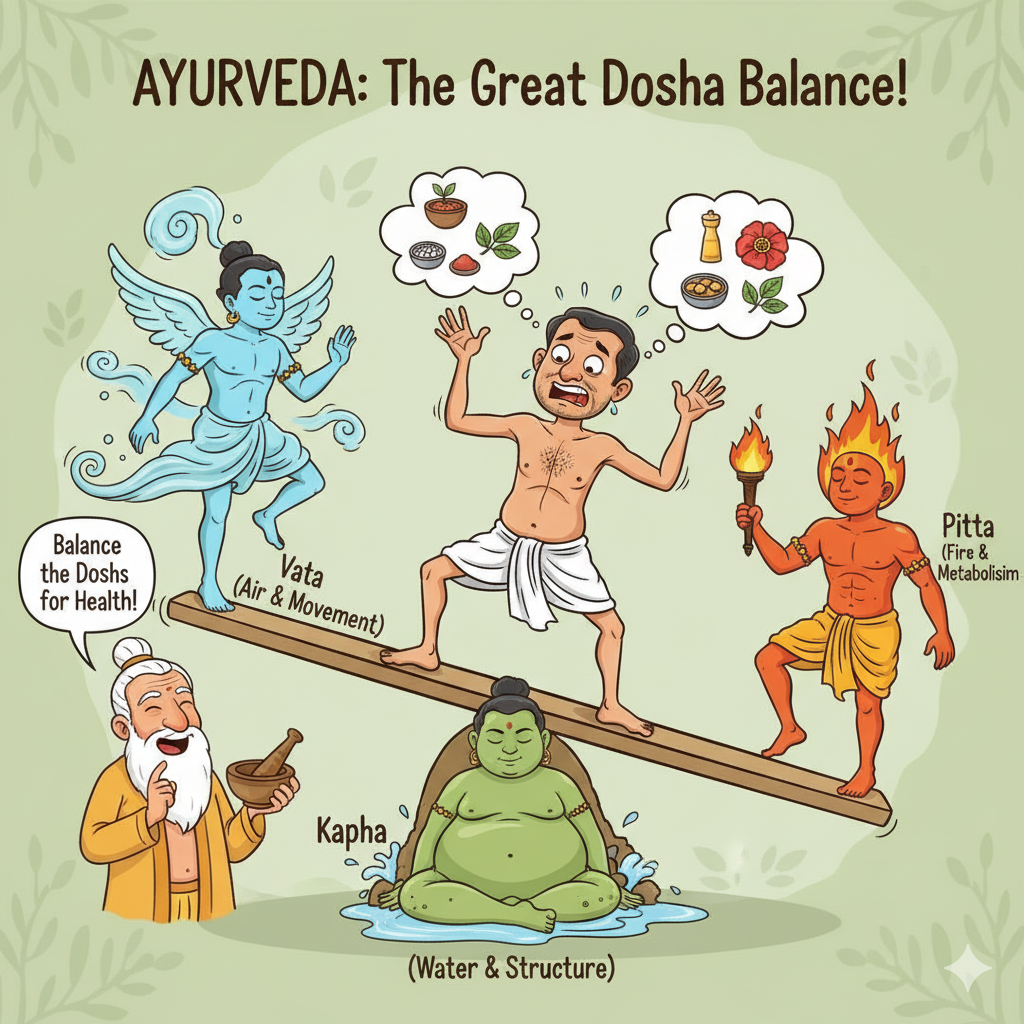
Ayurveda believes that our body and mind stay healthy when there is a balance between three life energies called Doshas:
- Vata (Air & Movement)
- Pitta (Fire & Metabolism)
- Kapha (Water & Structure)
When these are imbalanced → disease occurs.
How it works:
- Focuses on prevention and balance.
- Uses herbs, oils, diet changes, detoxification (Panchakarma), and lifestyle adjustments.
- Aims to treat the root cause, not just symptoms.
Example:
Instead of giving painkillers for arthritis, Ayurveda may focus on improving digestion and removing toxins (Ama) that worsen inflammation.
Y – Yoga and Naturopathy
These are actually two systems, but often grouped together because both believe in natural healing.
🧘♂️ Yoga
- Origin: Ancient India.
- Focuses on mind-body balance through asanas (postures), pranayama (breathing), and meditation.
- Improves flexibility, reduces stress, and enhances overall health.
- Also used medically for conditions like hypertension, anxiety, obesity, and diabetes.
🍃 Naturopathy
- Focuses on the healing power of nature 🌱.
- Belief: “Body can heal itself if given the right conditions.”
- Uses diet therapy, hydrotherapy, sunlight, fasting, exercise, and natural remedies.
- Avoids chemical or synthetic drugs.
Example:
For chronic constipation — instead of laxatives, Naturopathy may use high-fiber diet, abdominal massage, and morning yoga.
U – Unani Medicine
Origin: Ancient Greece (developed by Hippocrates), later refined by Arab physicians, and brought to India by the Mughals.
Main idea:
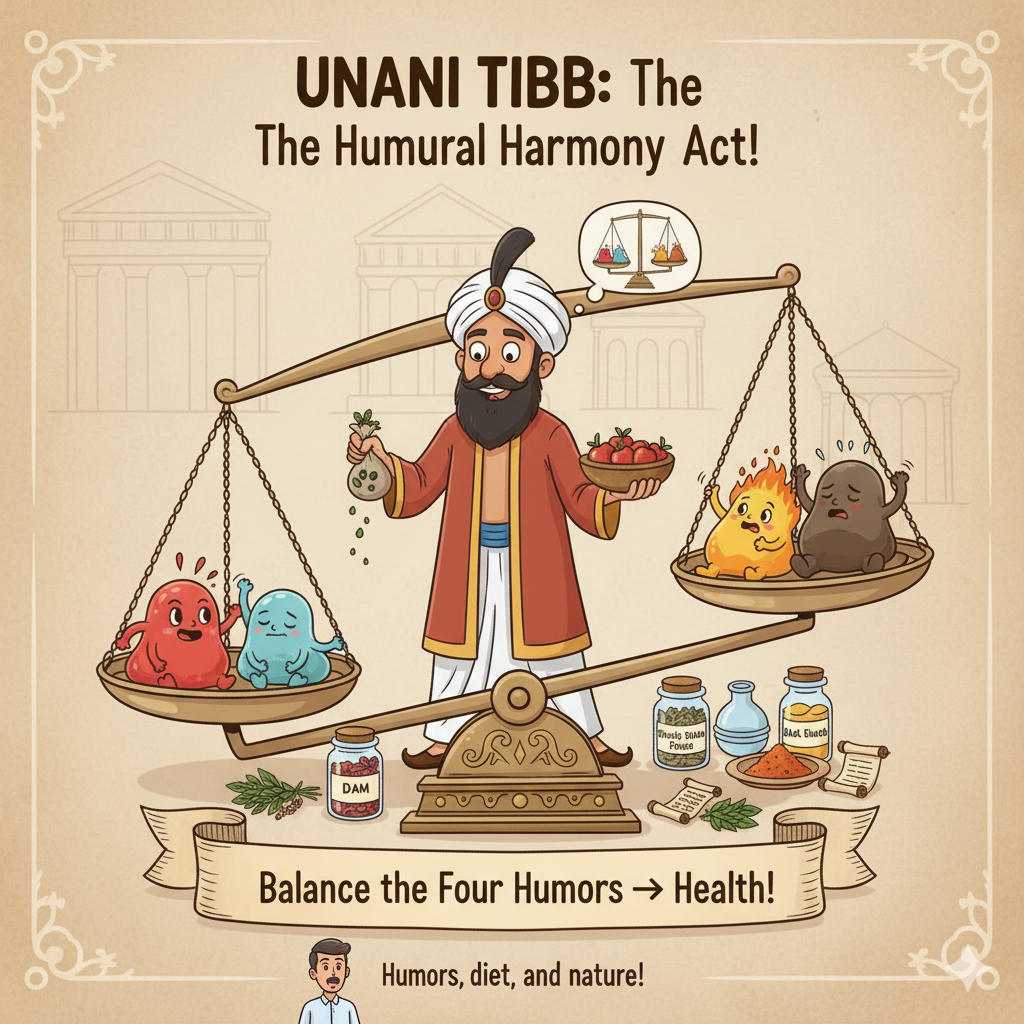
Health depends on the balance of four humors (body fluids):
- Blood (Dam)
- Phlegm (Balgham)
- Yellow bile (Safra)
- Black bile (Sauda)
An imbalance causes disease.
How it works:
- Uses herbal medicines, diet, regimenal therapies (massage, cupping, exercise, purgation), and lifestyle correction.
- Focus on restoring balance through natural means.
Example:
For hypertension, Unani may recommend cooling foods, mild purgatives, and stress reduction — to balance “excess heat” in the body.
S – Siddha Medicine
Origin: South India — developed by ancient Tamil sages known as Siddhars.
Main idea:
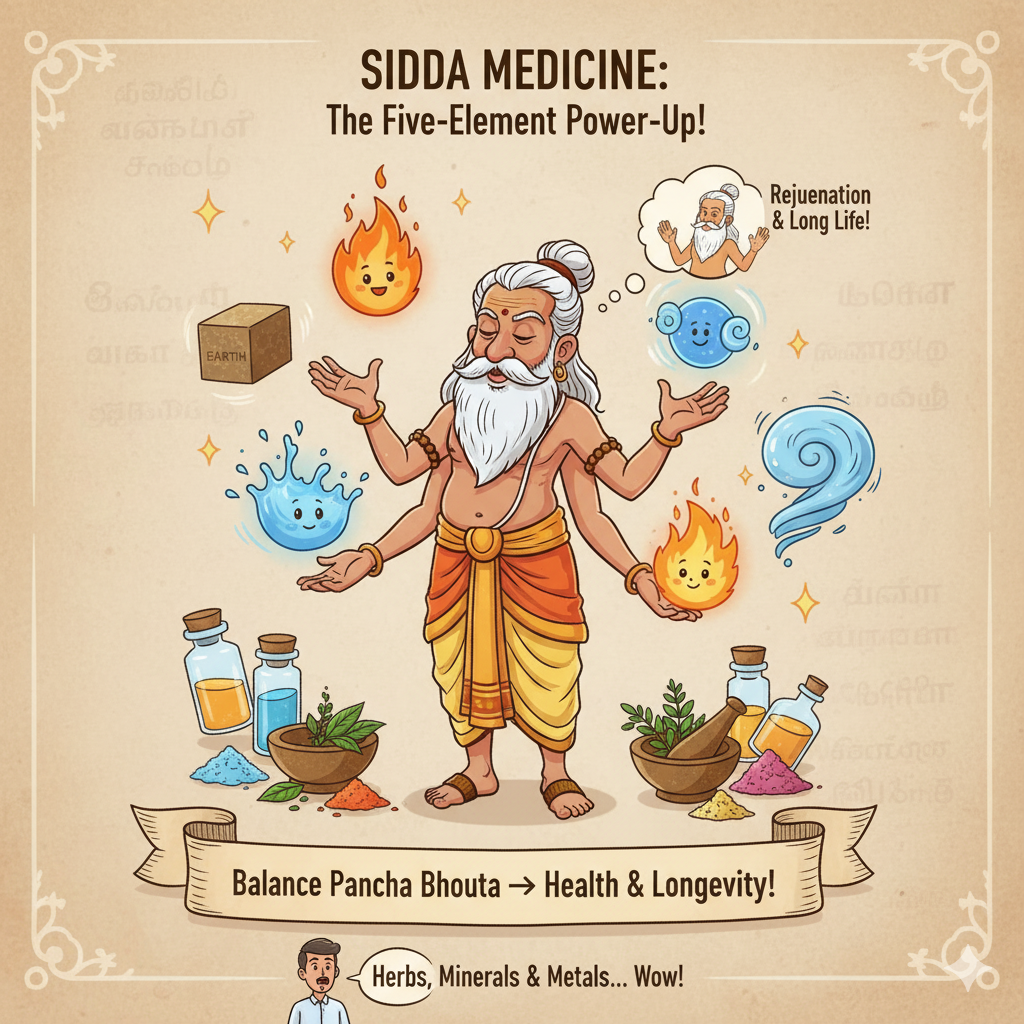
The body is made of five elements (Pancha Bhoota) — earth, water, fire, air, and space —
and disease occurs when these are out of harmony.
How it works:
- Uses herbal, mineral, and metal-based formulations.
- Focuses on rejuvenation and longevity — maintaining youth and preventing aging.
- Similar to Ayurveda in concept but with its own unique medicines and diagnostic methods.
Example:
A Siddha physician might treat chronic joint pain using herbal-mineral preparations and diet control to restore the “vitiated humors.”
H – Homeopathy
Origin: Germany, by Dr. Samuel Hahnemann (18th century).
Main idea:
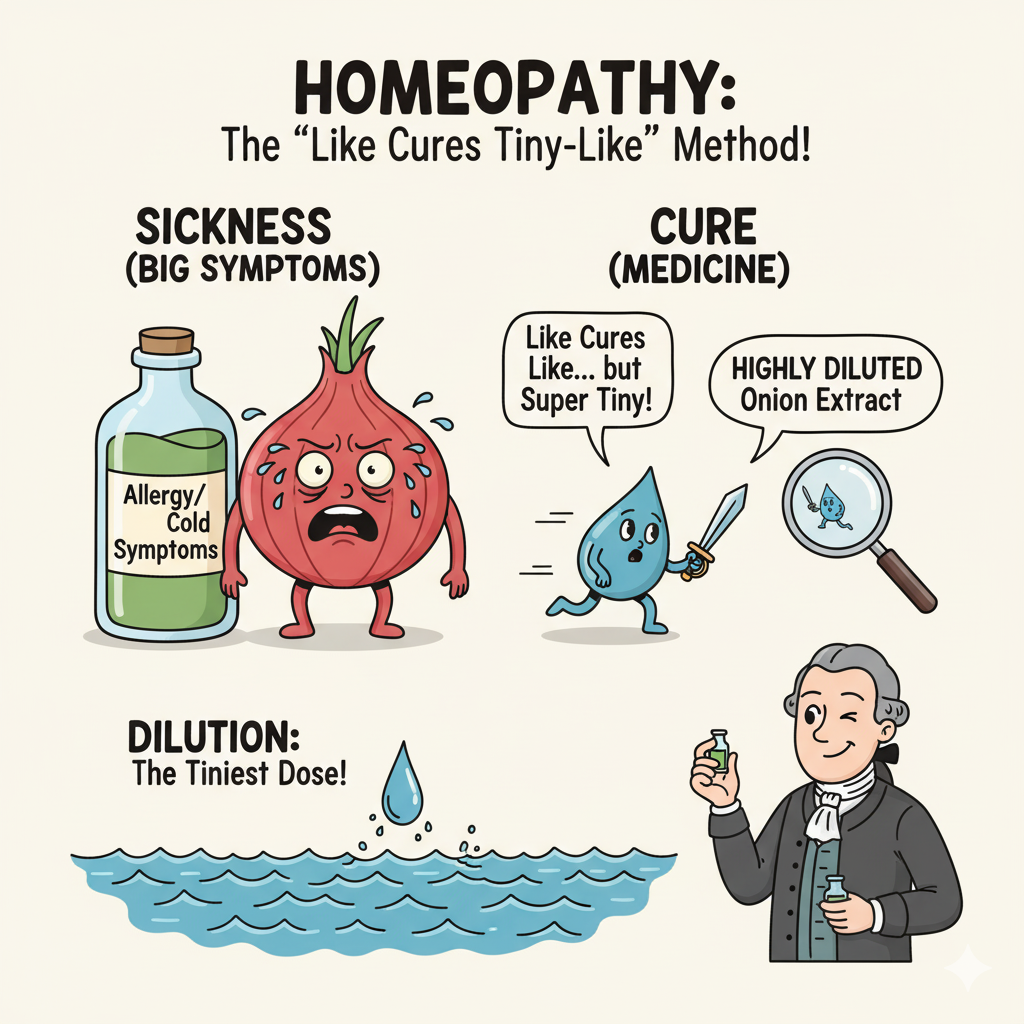
Based on the principle “Like cures like” —
a substance that causes symptoms in a healthy person can cure similar symptoms in a sick person if given in very small doses.
How it works:
- Uses highly diluted medicines made from plants, minerals, or animals.
- Belief: These dilutions stimulate the body’s vital force to heal itself.
- Focuses on individualized treatment — two patients with the same disease may get different medicines.
Example:
For allergic cold with sneezing and watery eyes, Homeopathy may use a tiny dilution of onion extract (since onion causes similar symptoms).
Summary Table
| System | Origin | Main Belief | Uses / Focus |
|---|---|---|---|
| Ayurveda | India | Balance of three doshas (Vata, Pitta, Kapha) | Herbs, diet, detox, lifestyle |
| Yoga & Naturopathy | India | Body heals naturally; mind-body unity | Postures, breathing, diet, sunlight, fasting |
| Unani | Greece → Arabia → India | Balance of four humors | Herbs, diet, regimenal therapies |
| Siddha | South India (Tamil Nadu) | Balance of five elements | Herbal-mineral drugs, rejuvenation |
| Homeopathy | Germany | “Like cures like” with micro-doses | Individualized treatment for symptoms |
How AYUSH Differs from Modern (Allopathic) Medicine
| Feature | AYUSH Systems | Modern Medicine |
|---|---|---|
| Approach | Holistic (mind, body, lifestyle) | Disease-focused |
| Treatment | Natural substances, lifestyle correction | Chemical drugs, surgery |
| Aim | Prevention & balance | Cure & control |
| Evidence base | Traditional experience, some clinical data | Scientific trials & evidence-based |
| Role today | Complementary & alternative | Mainstream healthcare |
🤝 Integration with Modern Medicine
India’s health policy promotes integration of AYUSH and modern medicine —
so that doctors can offer the best of both worlds:
- Use AYUSH for prevention and chronic care.
- Use modern medicine for emergency and acute treatment.
For example:
- A diabetic patient can use Yoga for stress control 🧘♂️,
- Ayurveda for diet correction 🌿,
- and modern medicine for glucose regulation 💉 —
together improving quality of life.
In Short
AYUSH = A bouquet of India’s healing traditions —
Ayurveda, Yoga & Naturopathy, Unani, Siddha, and Homeopathy —
each different in origin and method,
but all aimed at promoting health, balance, and natural healing.
Let’s See How Much You Learnt
Question:
A patient tells you, “Doctor, I take Ayurvedic medicines and Homeopathy both — they are same, right?”
👉 How will you explain the difference?
Answer (for self-check):
✅ No, they are different. Ayurveda is an Indian system based on balancing body energies (doshas) using herbs and diet, while Homeopathy is a German system based on the principle “like cures like” using highly diluted remedies.